
Here are some of our past courses to give an idea of what we offer.
Shakespeare: Life & Works
Explore Shakespeare via his life, poems and plays.
A case study of Hamlet—see “To be or not to be” performed in a variety of films.
Still Rocking After All These Years: The Music That Shaped a Generation
Join acclaimed music leader Ben England BEM for a rich and engaging day exploring the rise of rock music and its extraordinary cultural impact. Still Rocking After All These Years: The Music That Shaped a Generation traces the journey from the raw energy of 1950s rock ’n’ roll through the creative explosion of the 1960s, the ambitious experimentation of the 1970s, and the bold reinventions that followed.
Discussing four stories from The Penguin Book of the British Short Story, Volume 1
Many of the Nineteenth Century writers we now consider classic novelists were regularly producing short fiction. We’ll discuss how these suit reading tastes today, as well as considering a little of the recent history of short fiction.
Why do we never have time?
We constantly save time but never have any. We’re the masters of our destiny yet strangely powerless. We live an era of connection, but we’re lonely. Why? A sociological deep-dive into the world’s biggest questions.
The Sound of Many Waters
The Sound of Many Waters explores how composers have been drawn to water in all its forms: crashing seas, flowing rivers, quiet lakes and moments of deep stillness. Drawing on great works of European and American classical music, the day follows music shaped by storms and voyages, colour and reflection, movement and calm.
Making Paradise on the French Riviera
Monet, Renoir, and Cézanne were attracted from the 1870s onwards by the scenery and the light of the French Riviera.
The 1920s were a golden decade when Picasso and Matisse painted there and Scott Fitzgerald based his book ‘Tender is the Night’ on the American artist Gerald Murphy. Raoul Dufy’s free-flowing style captured the essence of the Riviera, and Matisse’s amazing chapel at Vence concludes our story.
Neo-classicism: Art in the age of revolution & Napoleon
This short course uses paintings, prints and architecture to shed light on the exciting and colourful period around the time of the French revolution.
Diego and Frida
Frida Kahlo and Diego Rivera, the iconic Mexican artists whose passionate, volatile yet enduring relationship created numerous great works of art. They shared a deep artistic and political bond which helped create some of the most iconic paintings of the 20th century. This study day will explore the tumultuous relationship and the wonderful paintings it produced.
Vikram Seth’s The Golden Gate
Vikram Seth is the global bestselling author of A Suitable Boy and An Equal Music. His first novel is an unrivalled triumph of both imagination and craft: an eloquent, thrilling soap opera set in 1980s San Francisco, featuring a politicised priest, repressed homosexuals, combative cats and a terrifying pet iguana.
It’s about the tech bubble, the Cold War arms race, generational change in a winemaking family – oh, and it’s in verse! More precisely, it’s written in the Onegin stanza, a sort of sonnet on steroids, of which there are 594. The rhythm will spur you on, and the rhyme will only increase your delight in this truly unique book.
The workshop will be led by Christophe Fricker, who has just completed his German translation of the book. He will guide us through its main motifs, introduce us to the characters, and help us enjoy its form. There may even be the odd creative exercise to complete together!
More Trolloping – Orley Farm
This stand-alone novel, Orley Farm, by prolific nineteenth-century novelist Anthony Trollope is a tale of family relationships, inheritance and suspected property fraud. It provides us with a window into Victorian society and the ideas that underpinned it.
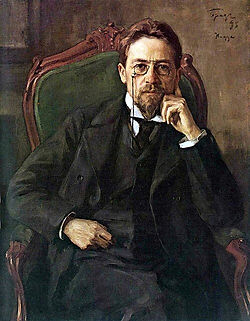
More Chekhov Short Stories
Chekhov wrote and sold short stories and vignettes of Russian life from 1880 to 1903, the year before his death from tuberculosis aged forty-four. During those twenty-three years, while he was also studying and practicing medicine, he produced at least 500 short stories.
Between 1916 and 1922 many of those stories were translated into English by Constance Garnett, and Chekhov’s approach to style, form and characterisation began to influence writers across the Western world.
He is widely regarded to be one of the greatest short story writers: many consider him ‘the grandfather’ of the modern short story.
We will aim to discuss what that means, as we consider four stories published between 1887 and 1899, his most prolific years as a story writer. We’ll talk about translations and translating, as well as themes, characters and what we get from reading a story about nineteenth century Russia.

Origins of Us: Why we think how we do
Have you ever wondered why we think in the way we do? This course aims to trace the changes in ideas, culture and mental patterning that have marked our journey from the Stone Age to the Age of AI.
Early Dickens – Sketches by Boz
Sketches by Boz were the first published sketches by Charles Dickens.
This course will look at a range of these sketches over three weeks and consider what themes are raised, discuss them in the wider context of the Dickens canon and examine their social and political context.
The sketches first started to appear in 1833 and were published in collected form in 1836. The collection is made up of character sketches, scenes and short tales and are hugely entertaining.
Origins of Us: Why we think how we do